Bonnets and Backpackers

September 10, 2026

Wow, you look amazing, I love your outfit, we all exclaim as Sophie joins us for lunch in the Common Room, her meal deal incongruous with the beautiful Regency clothes she's wearing. Did you make the bonnet yourself? Yes, she says, shyly tucking ribbons behind her ear to keep them out of her chicken wrap. I wanted to come for the Jane Austen festival but it's sold out, so I am here now instead.
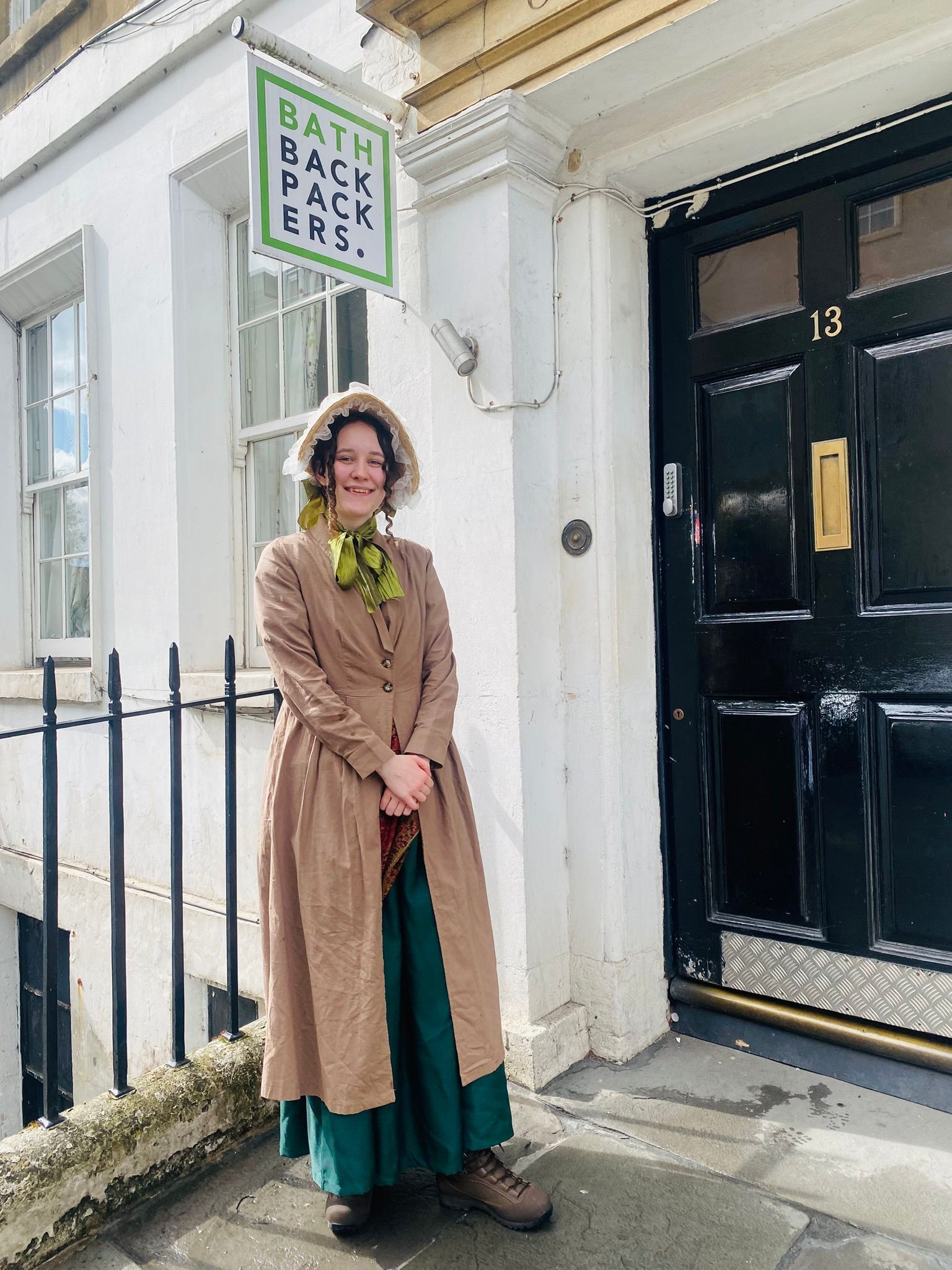
Regency holds huge appeal, combining the familiarity of fixed social structures and romantic exploits, with a wistfulness for pre-industrial times. And with the Jane Austen Festival starting later this week, the hostel is buzzing with guests in town to attend balls and parades, and to visit the iconic Bath spots of Jane Austen's novels. Bonnets, made from soft fabric and with a tie under the chin, typify Regency wear so form an essential part of any serious female festival outfit. Like Sophie, many guests make their own, waiting - patiently and nervously - in a queue to use the hostel's sewing machine as they put finishing touches to costumes.
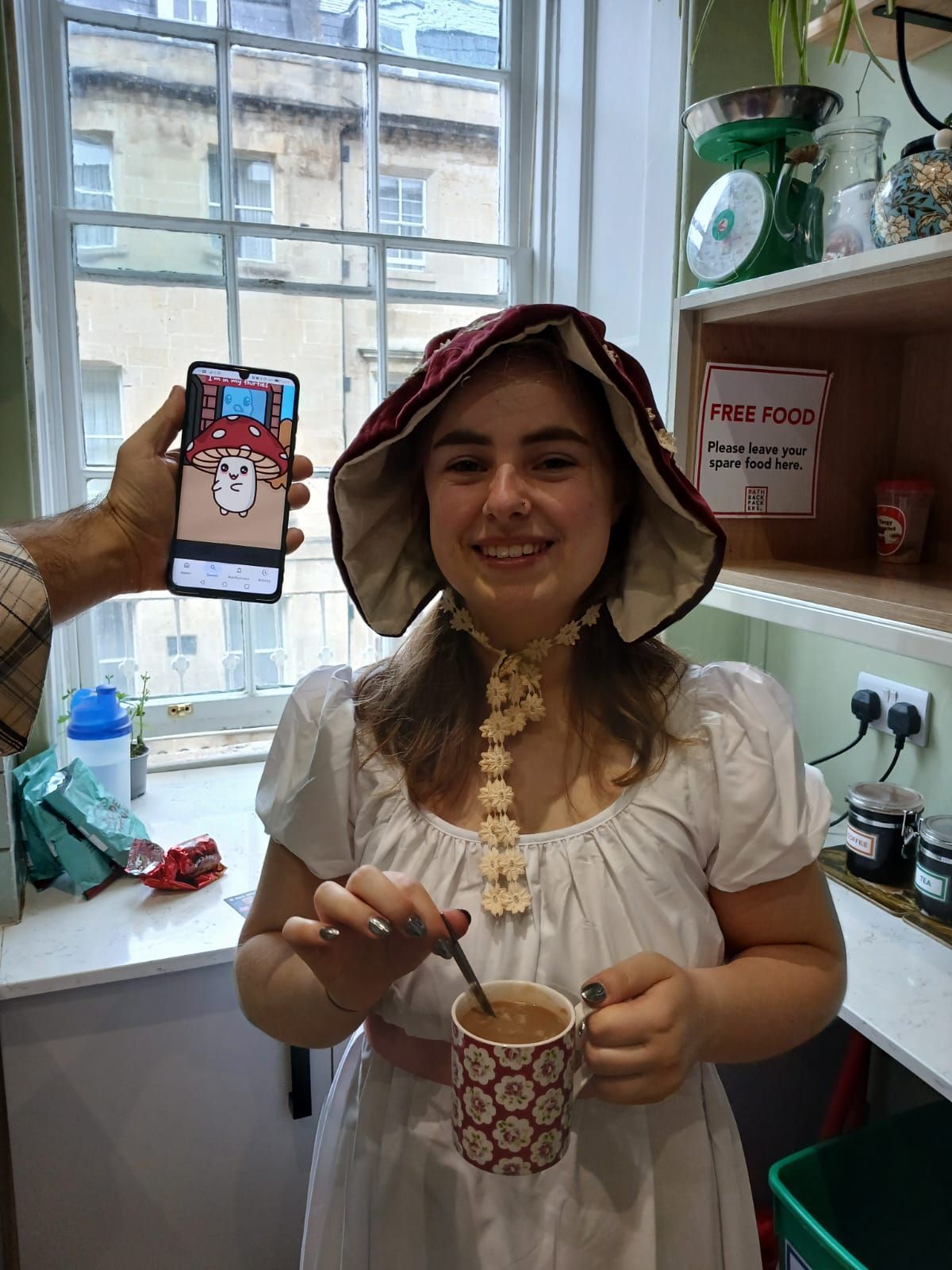
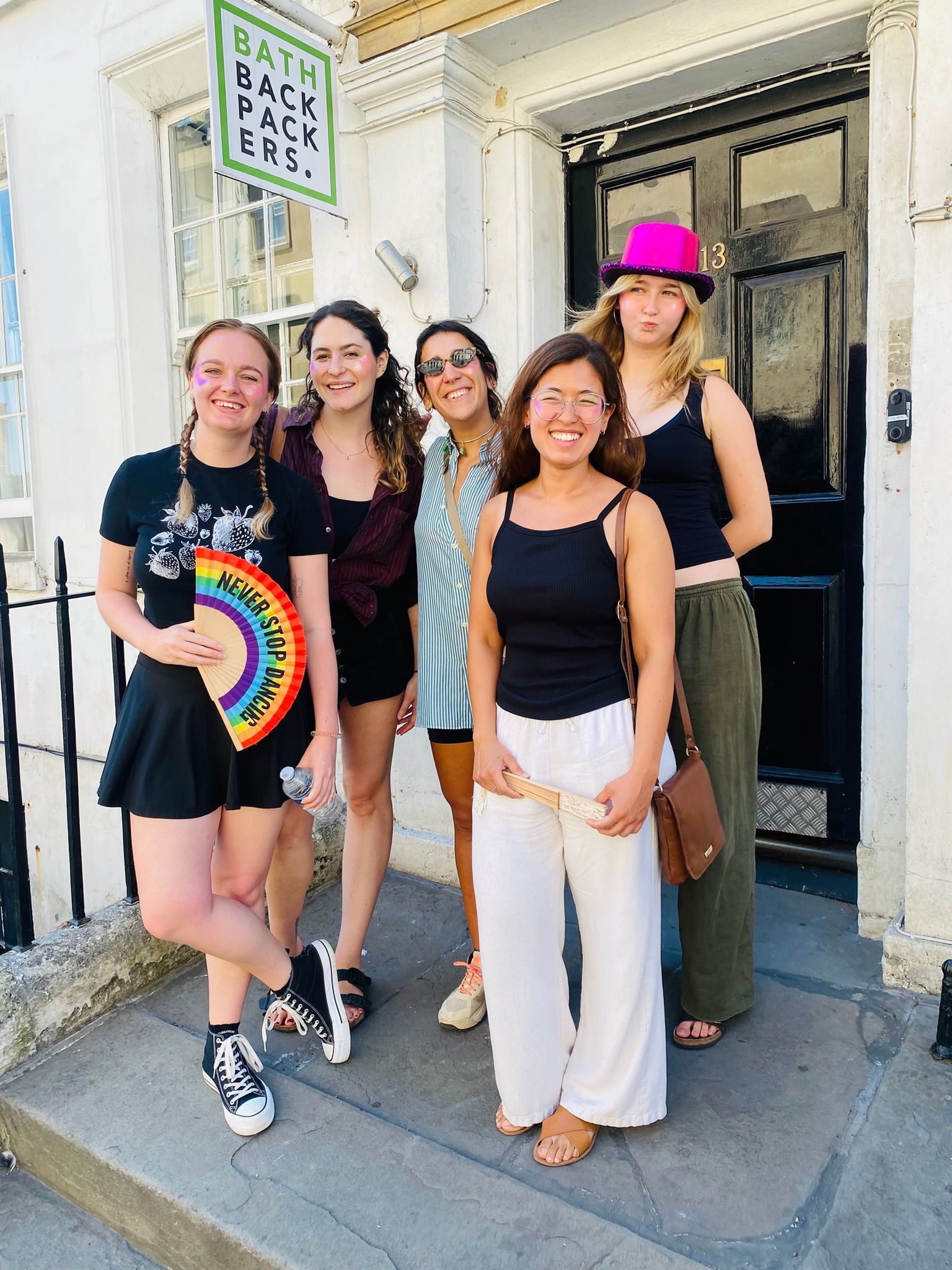
Yet even during the Jane Austen Festival, bonnets won't be the only hats around. The pink cowboy hat seems to have made a permanent home for itself on top of the reception clock. Found on a night out in Bath, this iconic item has been to many a party, on many a head, completing a wide variety of outfits worn by guests over the years, from Ally to Jason to Rocio, and played a starring role amongst our Queer Bath festivalgoers back in June.


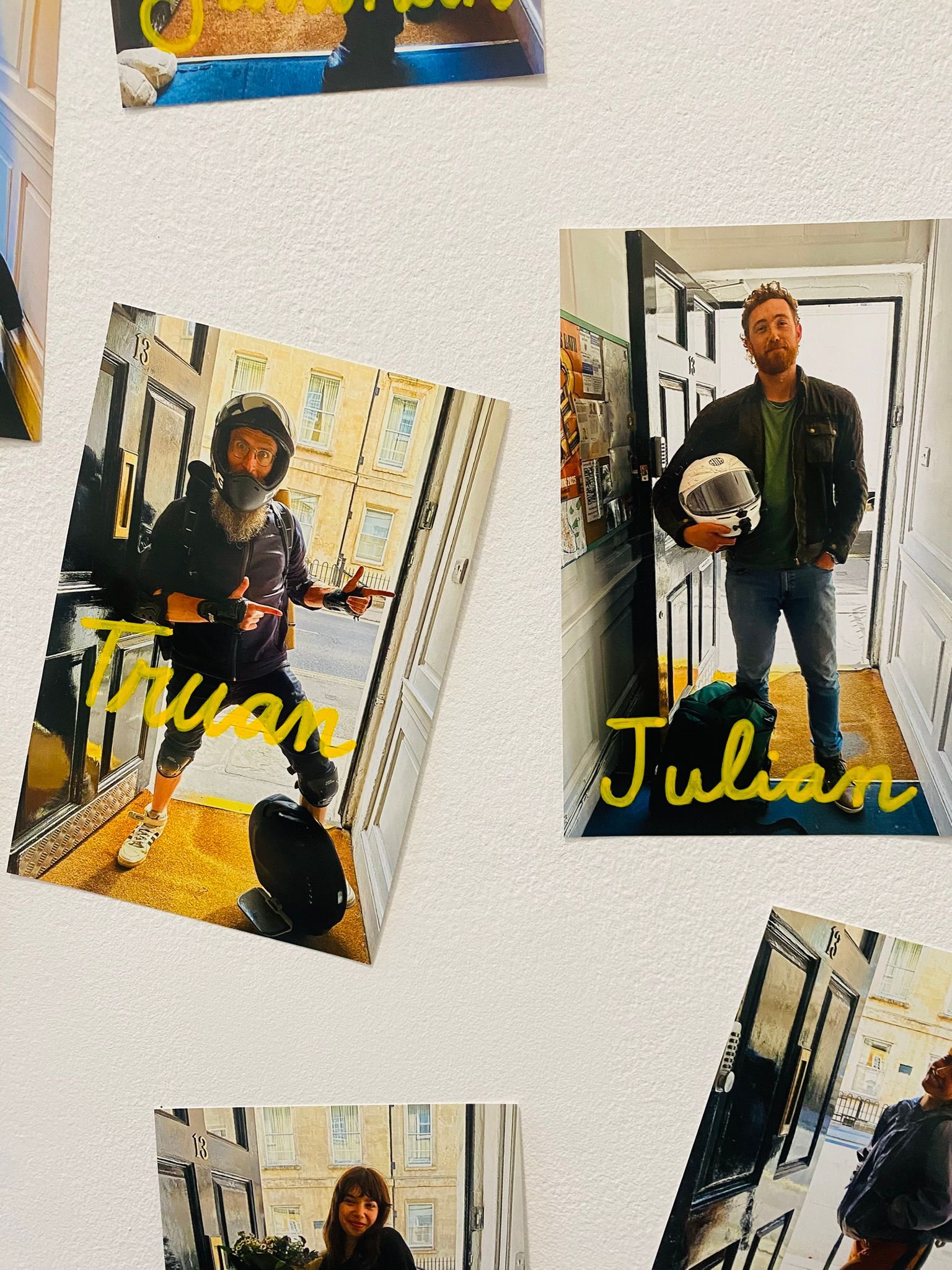
Cyclists with bike helmets are a frequent hostel fixture, diverting through Bath on the way from Land's End in Cornwall to John O'Groats in Scotland, or heading over to Bristol the next day. Last Autumn, Julian arrived and departed by motorbike, wearing a big protective crash helmet, while Truan moved to and fro on his special wheel, with the combination of his transport mode and helmet channeling futuristic vibes.


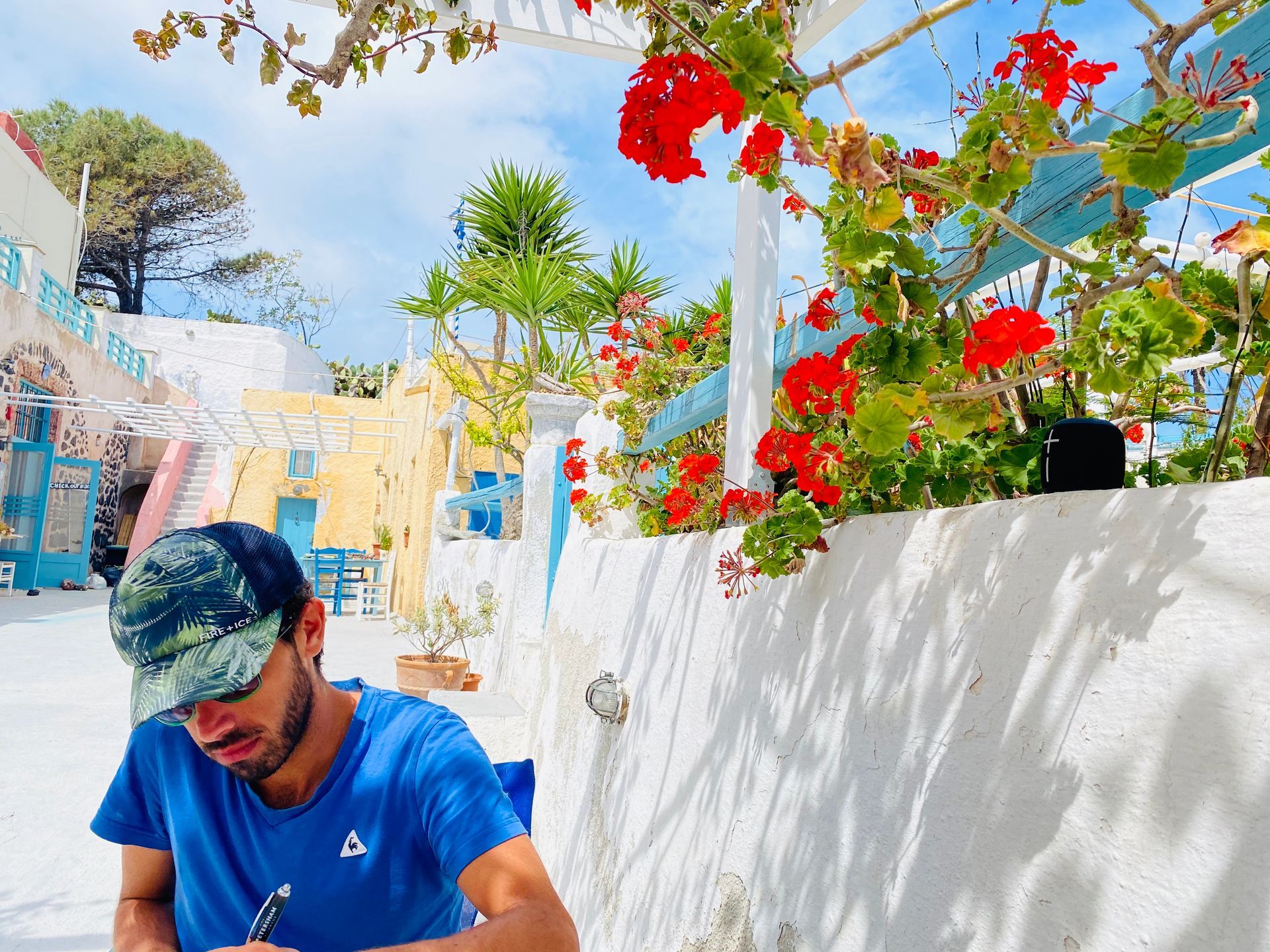
Feeling naked at a music festival this summer after leaving his usual cap at home, Aris - a committed cap wearer - headed to the merch and bought a black corduroy cap from the band Ditz. The problem was he'd not yet listened to their music, so it was a relief when they came on stage and were really good. His Ditz cap looks great but I still like the botanical cap best. A cheap purchase from Greece - where we lived in a hostel on an island - it reminds me of that time of our lives.


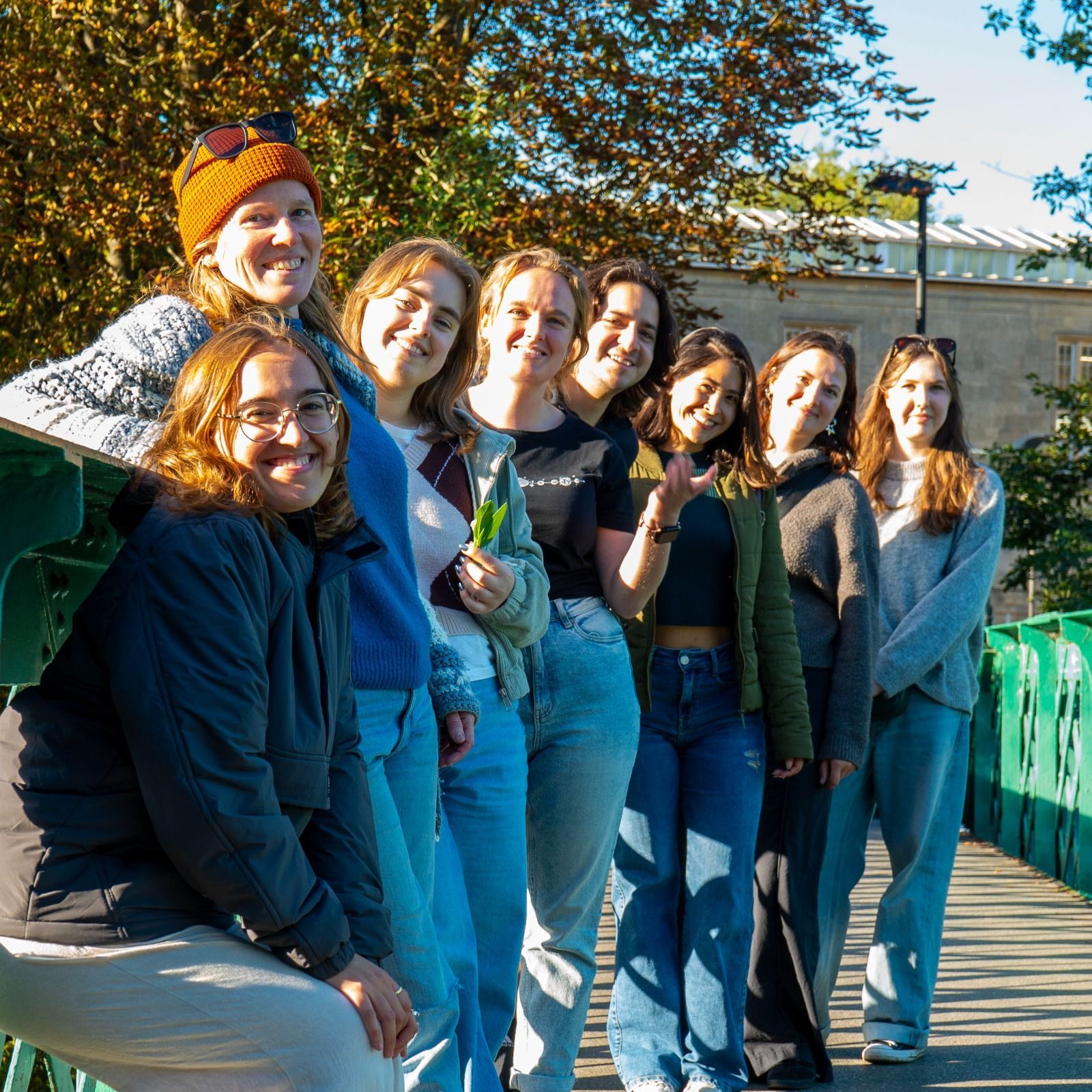
Many years ago, I found a gorgeous trilby in the Brussels flea market and wore it forever, winter and summer. As we packed for our move to the hostel, I finally accepted that it didn't really fit my head and it was time to move on from the pronounced red stripe it left across my forehead. My new favourite is a lovely burnt orange beanie picked out from our lost and found box. I will happily wear it for six months of the year, outdoors and in, once my summer hat is put away for the season.


As a group of four Malaysian women gather in the Common Room for a shared meal, headscarved indoors for religious reasons, Aris and I talk about how not all headwear is created equal. The social and cultural meanings we attach to head hair also play out through headwear, reflecting how we understand freedom and attractiveness. While silk headscarves may be worn simply for their beauty, and wigs can be a fun party piece or expression of identity, they're also worn in the hostel by women who've lost their hair through chemotherapy. And in secular Western societies, signifiers of Islam can be easy targets for cheap political point scoring.


Balaclavas can protect the wearer's identity for good or bad reasons, while caps have taken on a more complicated meaning in the Trump era. Even the Regency bonnets soon to fill our Common Room and the streets of Bath held political connotations in Jane Austen's times, as markers of marital status and social class. As you watch the parade, see if you can spot any of the simpler, less-adorned bonnets that housekeepers, scullery maids and other working class women would have worn. There won't be many.
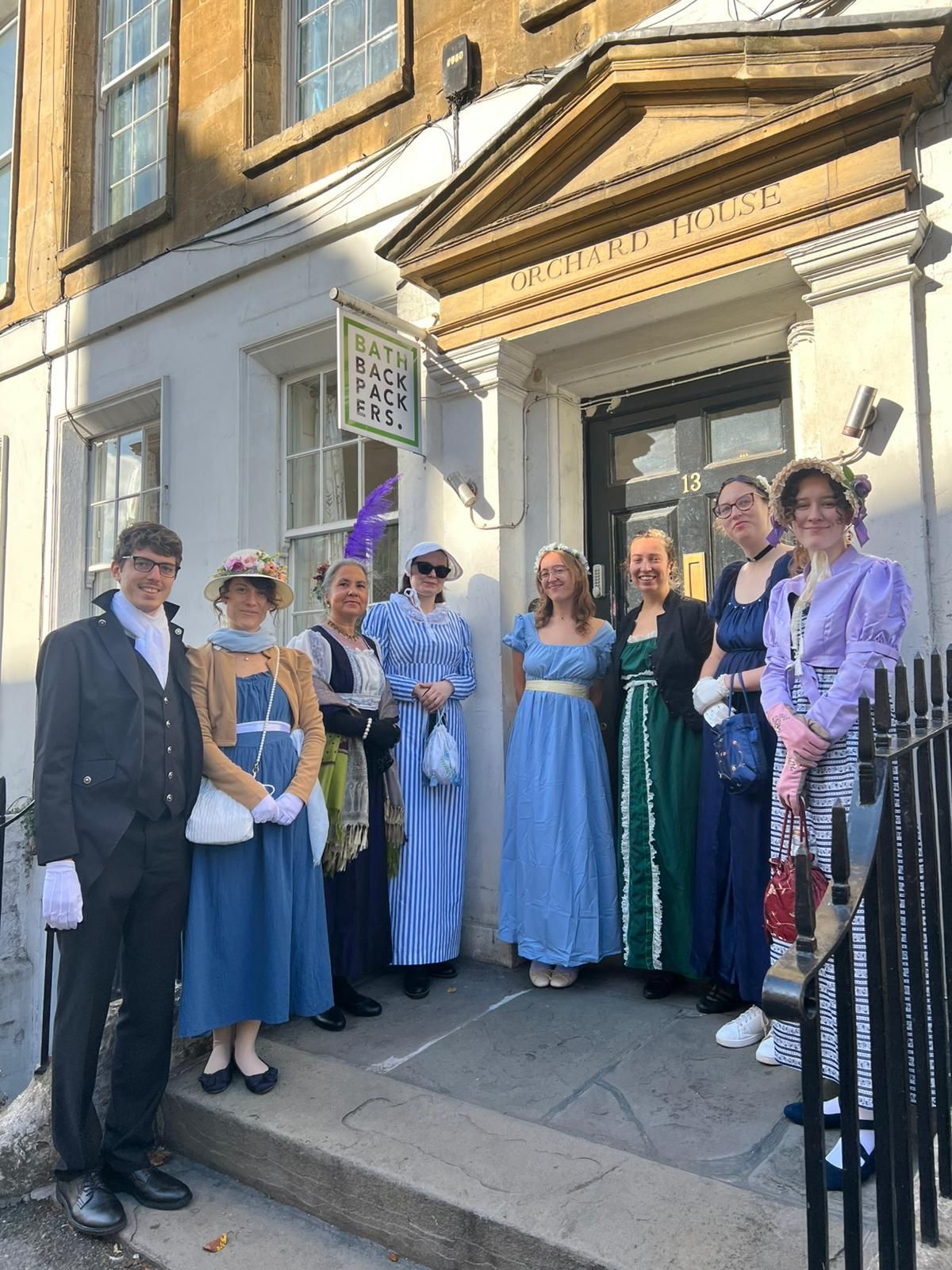

Photo creds Dave, Emily, Kate
By Kate Arthurs • October 27, 2026
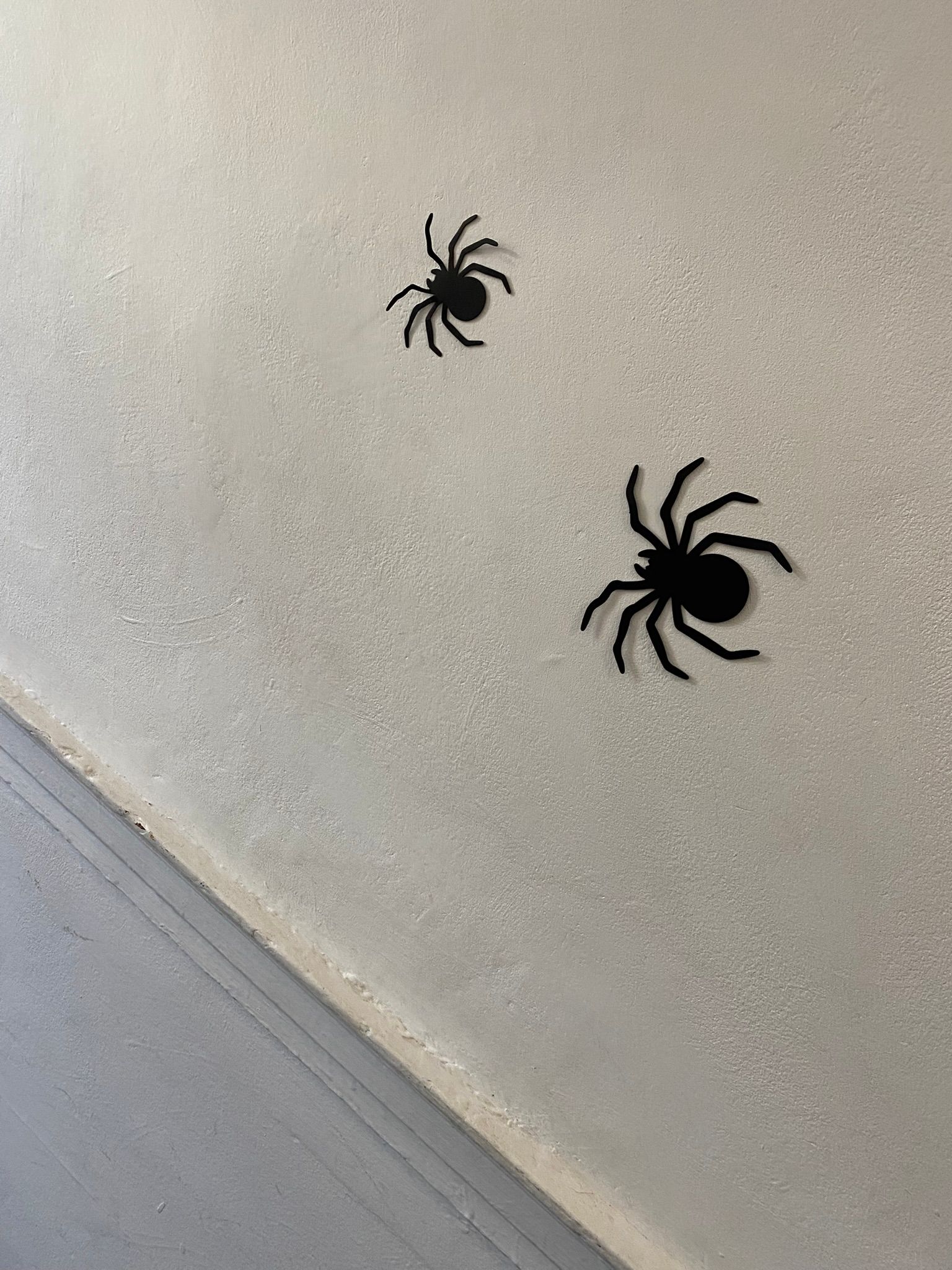
They even glow in the dark, Alba says proudly, flashing nails freshly painted with ghosts and spider's webs. Sun streams into the common room, illuminating the pumpkin that Jayne will cut up for soup later this week, as we discuss ideas: we'll decorate the building, dress up, have a party. With Olivia's beautiful poster, our ideas soon turn into a spooky season festival.
By Kate Arthurs • October 8, 2026
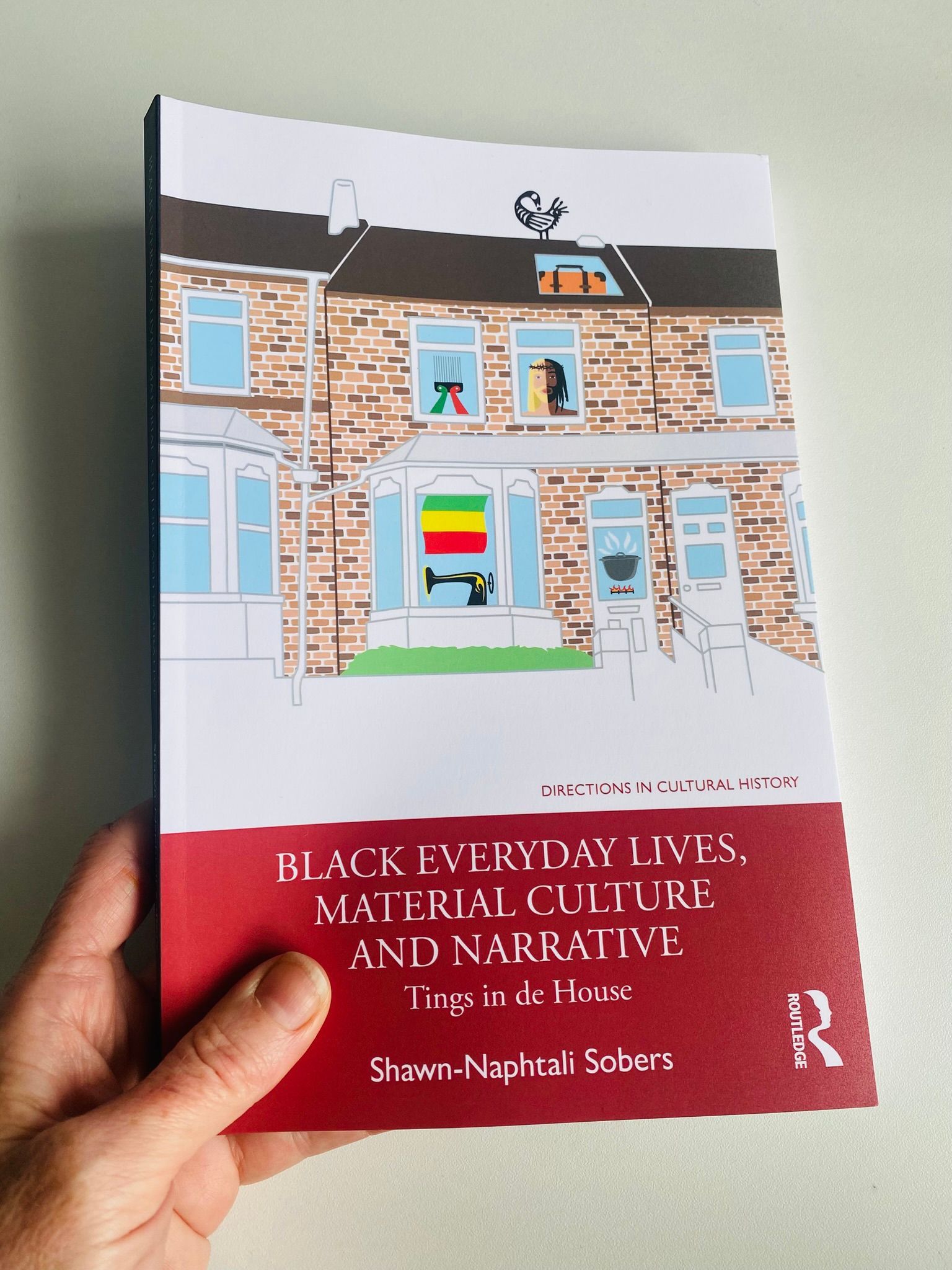
It's a busy morning as Aris rushes back with the hair dryer, so excited about his visit that bed making will just have to wait. I went to the new Share and Repair place, he says, have you been? It's like a thing-hospital. There's someone on the desk and I say, I'm here for a hairdryer and she looks down at the list and says, Aris Arthurs? This way, please. And then there's a man, in a white coat, and he leads you through and there are all these desks with people face to face for thing-consultations. It's so beautiful and organised. And here is our hairdryer, it's mended! Hostels are hard-working places where every object has to justify its presence. Is it ok, this chopping board, asks Patrick. I've brought youse a knife too. I turn the lovely wooden chopping board over in my hands - and that sharp knife - yes, I say, they are welcome. Too many things equals clutter and a place that's hard to clean; too few or the wrong things makes for a poorly functioning environment for people sharing space and resources together. Our sewing machine was gifted to us by Yuko, and used periodically but intensely by crafty people like Maggie. When Maggie and Aris agreed we needed floor cushions in the Vaults, I wasn't convinced, imagining them as uncomfortable and bulky, cluttering the space. But as Maggie's meticulous sewing brought together a set of three beautiful, robust and (I had to admit) comfortable cushions, I was thrilled by the bringing back to use of fabric that had once been curtains in my family home, in a way that made the space softer and more welcoming. In his book Tings in De House, Shawn Sobers quotes the Jamaican poet Verna George who refers to the sewing machine as 'a member of our house'. The longer we live with the sewing machine, the more it contributes to the household, and the more Verna's reference makes sense. While I lounge on the floor cushions reading Shawn's book, Stephen switches from The Soft Bulletin to Blue Lines, and a familiar bassline pulses out. I'm sent back to a muggy Saturday afternoon, rummaging racks of second hand CDs in Bath's music exchange shop, ready to spend all my pay packet on an album. With my 90s indie tastes branching off into rap, soul, and jazz, so the CD collection grew. Streaming and travel consigned them to storage for years, but when Aris found perfect used speakers and a decent stereo, we gave them new life in the hostel. Reading on, Shawn discusses generational differences in the ornaments and souvenirs displayed in the front rooms of Caribbean families in the UK, and I find myself wondering what my parents would have thought of our choices to bring out their special plates . A dresser displaying 'best' plates and glasses is a familiar feature in British front rooms, and my childhood house was no exception. But as Ana and I boxed stacks of pretty crockery to transfer from my old family home to the hostel, I realised that these lovely 'best' items held less meaning than the frequently-used mugs and plates kept in the kitchen, and we resolved to give life to them. Now, daily use by hostel guests will likely hasten the day on which plates hand-painted for my parents' 1965 (check) wedding might break, and of course that will be sad. Still, I like to imagine my parents happy at the idea of their plates thriving through regular use, reminding me of them, and bringing beauty into our daily lives. Some things in the house have a life of their own yet still need the care of people - many of us - to thrive. I'm moving to Bangladesh, Al messaged me. Do you want my plants? The next day seven of us headed over to his place to gather armfuls of dwarf palm, pothos and cactus. Later, Emily liberated the peace lily for repotting, dividing its densely packed leaves between thirteen smaller pots. Truan lovingly wiped the leaves, and before long they started to flower. Scanning Reception to see what the plants need, I'm always reminded of people who've cared for them over time: Fine, Lea and Laure, Julian, Emily and Truan. We rely on the things in the hostel, and they rely on us. Last summer, when one of our two huge fridges stopped working, we had to make swift choices to keep our food in edible condition. Though replacing the broken part was more expensive than buying a new fridge, Aris insisted that it's wrong to discard something so big and so full of material, when it can be repaired. Skilled work revived the fridge, and it has come to stand for our commitment to repair - even of objects that are neither beautiful items nor meaningful symbols. None of us - hairdryers or sewing machines, plants or plates, fridges or humans - flourish in isolation.
By Kate Arthurs • September 30, 2026
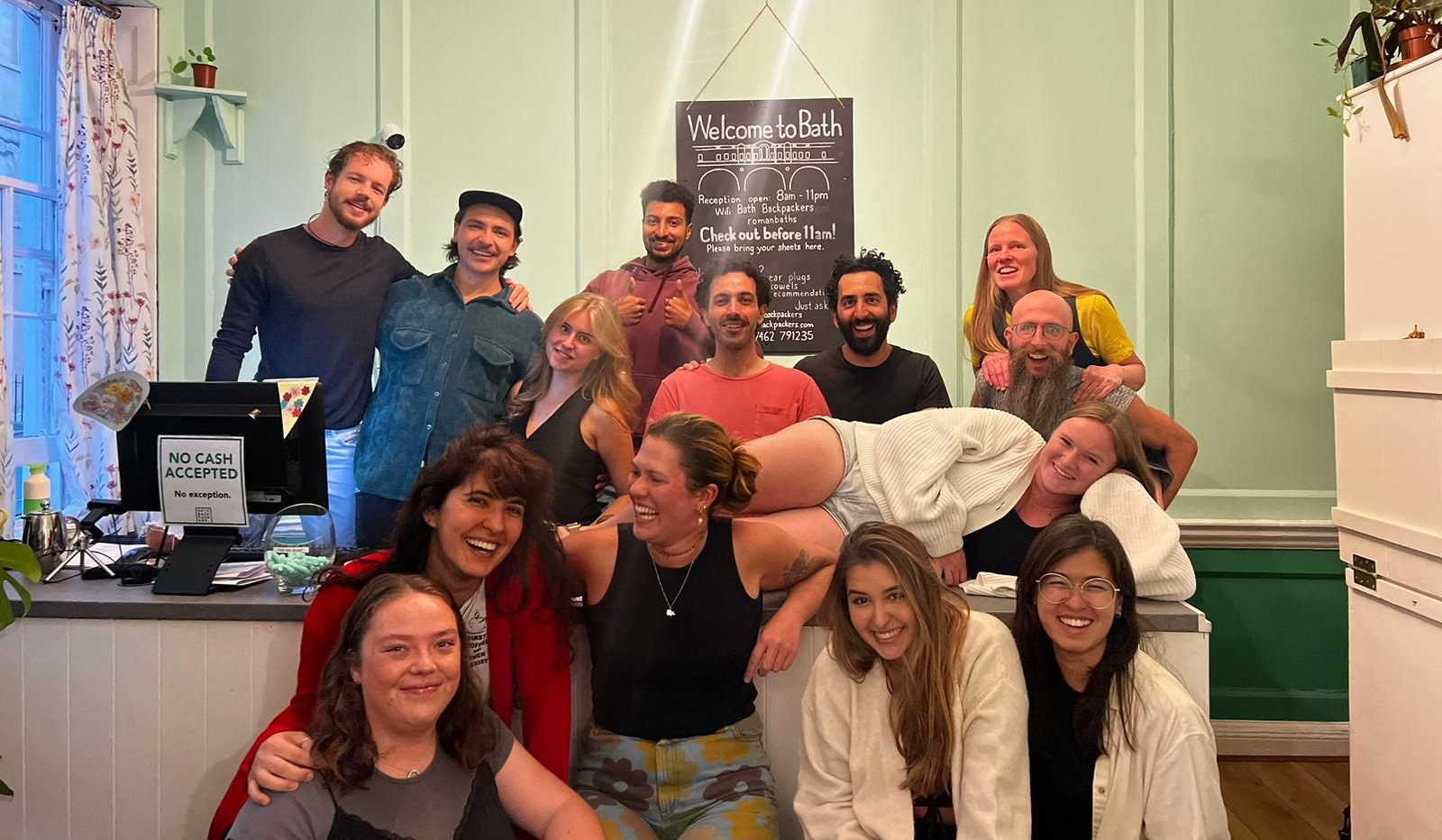
Bye Fam, calls Erin as she heads out. Maybe not meant as a shorthand, but still, Erin's call gets me thinking. Hanging out in reception later I put the question: can you say hostel relationships are family? Yes, says Tilly immediately. But more like cousins and uncles than mums and brothers, says Iris, and Jayne nods. I don't agree. So many businesses encourage employees to identify as family in order to create feelings of obligation and commitment beyond what is reasonable, and I don't want to fall into that ugly trap. But that isn't happening, insists Tilly. Still, I grew up understanding family as fixed and given - surely we can't see our hostel companions as equivalent?
By Kate Arthurs • September 22, 2026
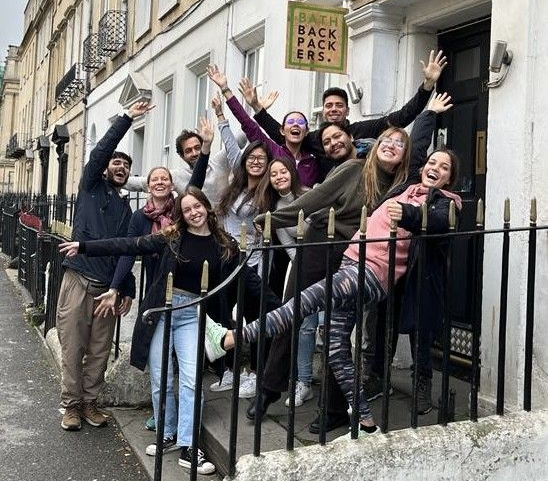
Aris and I are early at the Hare and Hounds to meet Clara and Sam, after a brisk uphill walk along conker-strewn side streets. We turn from the bar to be greeted not by Clara but by Teaghan who, to our great surprise, strolls through the door ahead of the others. Aris's wide eyes and broad smile fill his face, while I'm unable to contain tears of joy as Teaghan and I hug each other tight. I was your first volunteer, Teaghan reminds us, seating herself at Clara's side for Sunday lunch. Me and Julia we were in it because we wanted to help you guys, she says, but then we just brought the others along, got them into it too. Aris spent many hours on long calls to prospective volunteers before we sealed the deal to take over Bath Backpackers, explaining the project, showing it was not a scam where you'll end up in some dodgy place, patiently gathering a hardy first crew who were up for a wild ride. Julia and Teaghan were sometimes called on for verification. Do you remember when Pilar arrived? It's well over three years since we've seen Teaghan, not since she returned to Australia to launch her legal career at the start of 2023, and I'd forgotten what a firecracker she is, buzzing with energy, racing from story to story as she takes us right back to the beginning. Do you remember when we were all waiting at the bus stop in the rain, that very first crew, to go to the hostel together, but you guys hadn't even got the keys to the place yet? Yeah, I pick up, Aris and I stayed in a caravan over in Bristol, and you lot - who was that, you and Julia, plus Mari, Pilar, Eduardo and Ana, right? You lot were already in when we arrived to take over.
September 17, 2026
I agree to water my brother's allotment while he is away. Help yourself to plums and courgettes, he says, so I do - returning to the hostel with a bag full of heavy yellow marrows and jewel-like cherry plums. Every meal includes courgette, says my namesake friend Kate, who also grows her own vegetables. Courgette and tomato for breakfast, lunch and dinner. Mooching around Green Park Market on a Saturday morning is a lovely way to see what's coming out of the ground right now, say hello to Middle Ground Growers at their stall, and find seasonal food that connects with the earth and this place. From the first aroma of wild garlic in March to the jammy scent of blackberries in August, the hills of Bath are abundant in foraging opportunities.
By Kate Arthurs • October 20, 2024
Why are you travelling? When I ask our guests, most people say it’s for the experience: visiting the Roman Baths, doing the Skyline walk, checking out the Jane Austen festival. The idea in the ‘90s, when I first travelled, was to 'find yourself'. I used to mock this ironically - such a cliche! - but the truth is I did come upon personal insights in the deserts of Texas, the glaciers of New Zealand and the mangroves of India. Ainslie and I are making salad together. When you're old, I ask her, what will you remember about your trip to the Balkans? The people, she answers, not missing a beat. She's nailed it - there’s a more profound reason why we travel: to connect with people. Even in the most special of places, you’ll remember the people you were with, more than the place itself. Swimming across the Rio Grande in Texas was special - because I did it with Jane. 
By Kate Arthurs • April 20, 2024
Manu, Maggie and Aymeric are spring cleaning - sorting out the last cupboards and cubby holes that are not yet fully-organised spaces. One goal is putting all gardening equipment in the same place - free Olio plant pots picked up from Twerton, found bamboo canes, and soil rescued from Abbey Hotel 's end-of-summer dismantling of their outdoor planters. Once we have a gardening store, it'll be easier for me and Leia to repot plants that have outgrown their vessels, and in turn transfer into small pots the little sprouts that have sprung roots in jam jars. We have grand future plans - cuttings, herb planters, hooks to hang baskets from ceilings - but first we need to organise our equipment. Our brave shoots of tradescantia zebrina have waited patiently over winter, after I found them blowing around in the street having been yanked from city floral displays by heavy winds or drunk students. Winter is always tough for plants and this year it's been a real struggle for ours. While we closed for building work in January, the lucky ones merely had to cope with daily coatings of brick dust, while those less fortunate found themselves teetering precariously on naked metal bed frames in a lightless Solsbury dorm, in a futile quest for pale, cold light from windows blocked by stacks of kitchen equipment. One little succulent died, likely already weakened by my overwatering.
By Kate Arthurs • November 18, 2023
The dorm room names we inherited when taking over Bath Backpackers formed a chaotic patchwork of Roman emperors, historic local figures, and different words for water that did nothing to offer guests a sense of harmony. People were fond of Jane Austen, and Aqua had a calming appeal, but “you’re in Brutus” always had a ring of punishment when we checked in guests. Julia got around this with, “you’re in the dorm, ‘Brutus’” - rendering the violence of the name a bit less, well, brutal. Still, we decided early on that we wanted to change the room names to make them more coherent and relevant, and while we were at it, we thought we may as well restore and paint our doors too. After six months of planning, designing and labour all rooms had beautifully-restored doors, complete with their lovely new names. Job done, we thought. But no. Only days after we re-christened our ground floor dormitory, we discovered we had given it a name celebrating the worst of Britain’s past. We had to think again.
August 13, 2023
Every day we try to make things a little bit better at Bath Backpackers. Some days that’s hard - we’re tired, lack inspiration, or business operations just take over. But with collective effort we stick to this spirit of small improvements - better pillows, more charging points, upgraded storage - that make daily life smoother and more pleasant for guests. Sometimes people tell us what would help: a hook here, an extra sign there. And sometimes we’re encouraged by what other people are doing. As we’ve gradually improved our toilets, we’ve been motivated by ideas from architects, cultural centres and local bars, and have applied what we’ve learned by seeing the world through their eyes. Maddie Kessler is a ground-breaking and award-winning architect. Rather than designing the starchitect-style buildings that typically make for fame in her trade, she focuses on what people really need in public spaces, including basics like benches and toilets. She instigated public opening of the basement toilets of the British Pavilion in Venice as part of her enquiry with Manijeh Verghese into public and private spaces. As Maddie says, toilets are important in enabling access to public space. Watershed in Bristol is a cultural cinema and inviting cafe, bar and arty meeting place. As well as hosting excellent film and events programmes, they recently invested in a major toilet refit to make them welcoming and inclusive, ending up with individual private cubicles that are open to all based on function rather than who gets to use them. At Bath Backpackers, we have two universal toilet cubicles on the first and second floors, with male and female blocks downstairs - and for now, that general configuration works alright. When we took over last year, the first floor toilet’s need for emergency remedial work made it one of our immediate projects. The floor listed so much that regular guests dubbed it the Titanic Toilet: you had to use special muscles to sit on the seat, while a gratuitous cartoon of Jessica Rabbit leered down from above. Rather than waste the piece of board she was painted on, she’s now turned to face the wall. Upstairs, once we replaced the toilet itself, where Bath’s hard water had clogged the plumbing with limescale and it had stopped flushing properly, guest complaints reduced to a trickle. And by the time Franco had deep cleaned, meticulously scrubbing every inch of floor, wall, door and all installations, the toilets started to feel ok. But Aris kept reminding us: ok is not enough, we want the toilets to be beautiful. Visiting Budo bar - the new Japanese izakaya on Pulteney Bridge from the team at the Grapes - we were inspired by the aesthetic of their gorgeous ground floor toilet which reuses installations from a family home, matched with animé wallpaper. It was indeed time to start making our toilets beautiful. Julia picked out nice curvy dispensers for soap and toilet paper in a striking shade of orange. We worked out from there with apricot walls, black vinyl flooring, and refurbished vintage mirrors. Then improvements stalled. The first coats of paint weren’t robust enough, so we upgraded with a wipeable version. Our rickety floorboards resisted smooth flooring, which at first looked like a tiny mountain range. And our new lock broke immediately: the company said this was a first, having sold thousands, while we were just relieved it had malfunctioned without trapping someone in the toilet. Guests were patient as we closed one cubicle then another to improve and fix. One by one, we solved the issues and each time the toilets emerged a little bit better than before. Excited to find an off-cut of foliage blowing listlessly around Kingsmead Square, I brought it home, unearthed a jam jar Adam had kept for reuse, and potted it in soil rescued from a couple of coriander plants Eva and Estefany used to cook a shared Mexican feast. Now at home on the shelf Chris installed from a piece of wood we already had, it’s sprouting new growth. Then we returned to Watershed, and before the screening we used the toilets, where a dispenser on the wall next to a bank of sinks invites you to help yourself if you need a period product. If you’re used to female toilets, you may be familiar with such occasionally-free items that make you feel welcome, seen and cared for. But until now Aris hadn’t come across them. Heading back after the film (Barbie - neither of our cup of tea, but brilliantly presented at Watershed by Trans Barbie and Drag King Ken) he said, we should do that. We should put a nice little basket of tampons and sanitary towels in our women’s toilets. I resisted: they’re ecologically terrible products, everyone with periods should be using menstrual cups by now, we don’t want to promote unnecessary sanitary waste. Sure, Aris replied, but not everyone does use a cup yet, and it’s welcoming for women, especially if you’ve forgotten to bring something. I was persuaded. Brushing my teeth in our women’s toilets a few days later, I noticed that people were already starting to use the tampons and sanitary towels carefully arranged in a cute little tray. Watershed’s gender-neutral toilets had made the needs of menstruating people visible to everyone, including Aris. And, prompted by a design feature typically hidden from men, he’d been right to instigate this small but important improvement.
By Kate Arthurs • June 15, 2023
Welcome to Bath! You are probably here for the city’s history. And you’ve likely chosen to stay at Bath Backpackers having seen our reviews. You may have read things you like, but could also be put off by comments about the building: “everything creaks”, “old building” and “lots of stairs” - all accurate. What you probably don’t yet know is that this old place where you’ll be sleeping, eating and hanging out has fascinating connections - to Stonehenge and stalactites, horse hair and orchards, gambling and promiscuity, nuns and - of course - Jane Austen. Ours is certainly an old building. 36 years older than the USA, it was built before Britain took India, Australia and other countries as colonies; before light bulbs, telephones or the steam engine were invented. Bristol and Liverpool were active slave trading ports at the time of construction. To be precise, the main house is 284 years old, while the archway (which the Kitchen sits above) is slightly younger, built 279 years ago. Look above the front door, and you’ll see our building’s name: Orchard House. It is so called because originally it was in the orchard that belonged to the monks of Bath Abbey. If you pay for your stay by PayPal you’ll see that your payment is made out to Orchard House, Bath Ltd. When we took over the hostel, we considered renaming it from Bath Backpackers to Orchard House, but decided not to: Orchard House is a beautiful name, but Bath Backpackers is elegantly self-explanatory, so more helpful for guests.
More Posts