Things in the House
It's a busy morning as Aris rushes back with the hair dryer, so excited about his visit that bed making will just have to wait. I went to the new Share and Repair place, he says, have you been? It's like a thing-hospital. There's someone on the desk and I say, I'm here for a hairdryer and she looks down at the list and says, Aris Arthurs? This way, please. And then there's a man, in a white coat, and he leads you through and there are all these desks with people face to face for thing-consultations. It's so beautiful and organised. And here is our hairdryer, it's mended!
Hostels are hard-working places where every object has to justify its presence. Is it ok, this chopping board, asks Patrick. I've brought youse a knife too. I turn the lovely wooden chopping board over in my hands - and that sharp knife - yes, I say, they are welcome. Too many things equals clutter and a place that's hard to clean; too few or the wrong things makes for a poorly functioning environment for people sharing space and resources together.
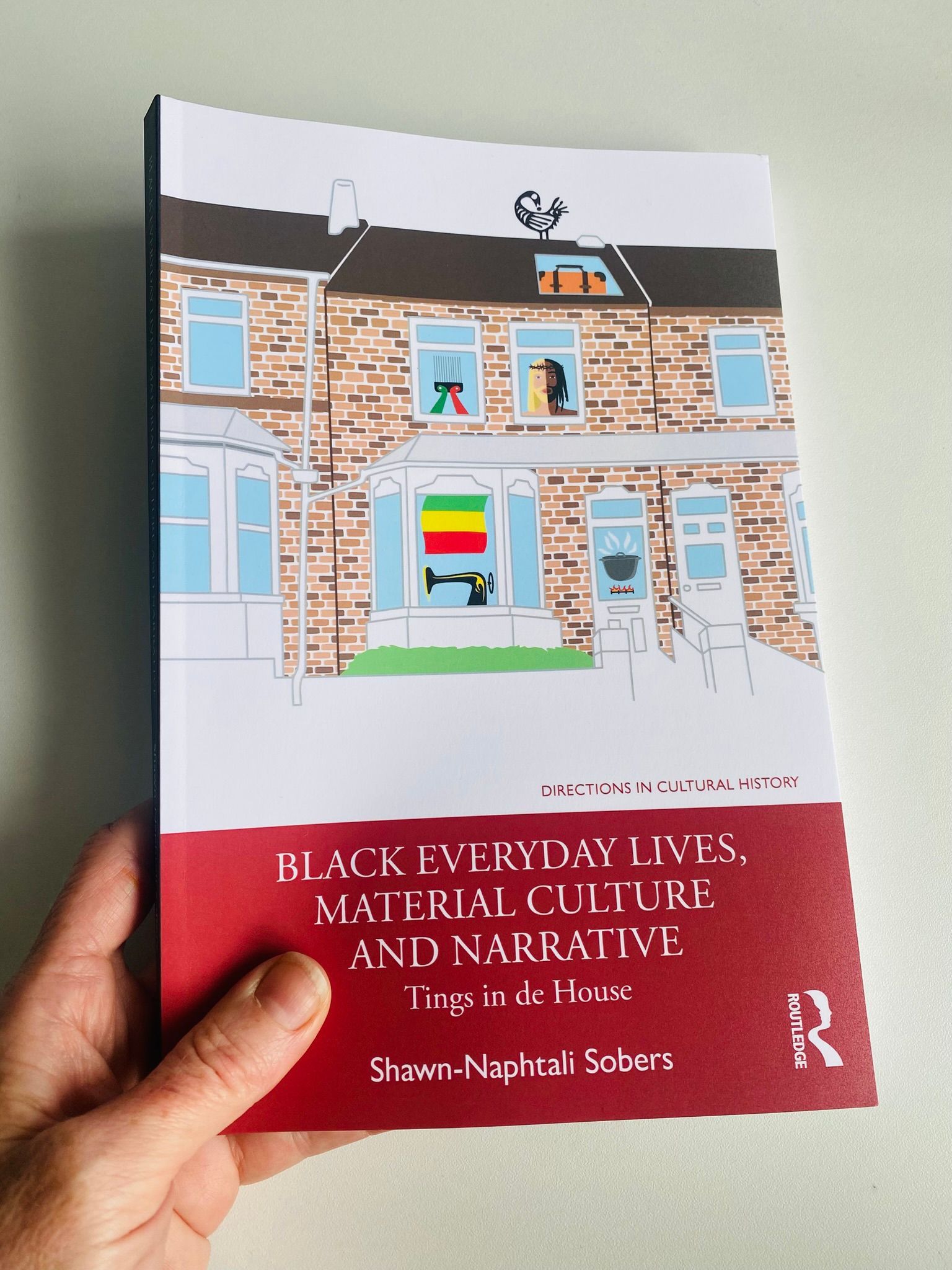
Our sewing machine was gifted to us by Yuko, and used periodically but intensely by crafty people like Maggie. When Maggie and Aris agreed we needed floor cushions in the Vaults, I wasn't convinced, imagining them as uncomfortable and bulky, cluttering the space. But as Maggie's meticulous sewing brought together a set of three beautiful, robust and (I had to admit) comfortable cushions, I was thrilled by the bringing back to use of fabric that had once been curtains in my family home, in a way that made the space softer and more welcoming. In his book Tings in De House, Shawn Sobers quotes the Jamaican poet Verna George who refers to the sewing machine as 'a member of our house'. The longer we live with the sewing machine, the more it contributes to the household, and the more Verna's reference makes sense.
While I lounge on the floor cushions reading Shawn's book, Stephen switches from The Soft Bulletin to Blue Lines, and a familiar bassline pulses out. I'm sent back to a muggy Saturday afternoon, rummaging racks of second hand CDs in Bath's music exchange shop, ready to spend all my pay packet on an album. With my 90s indie tastes branching off into rap, soul, and jazz, so the CD collection grew. Streaming and travel consigned them to storage for years, but when Aris found perfect used speakers and a decent stereo, we gave them new life in the hostel.
Reading on, Shawn discusses generational differences in the ornaments and souvenirs displayed in the front rooms of Caribbean families in the UK, and I find myself wondering what my parents would have thought of our choices to bring out their special plates . A dresser displaying 'best' plates and glasses is a familiar feature in British front rooms, and my childhood house was no exception. But as Ana and I boxed stacks of pretty crockery to transfer from my old family home to the hostel, I realised that these lovely 'best' items held less meaning than the frequently-used mugs and plates kept in the kitchen, and we resolved to give life to them. Now, daily use by hostel guests will likely hasten the day on which plates hand-painted for my parents' 1965 (check) wedding might break, and of course that will be sad. Still, I like to imagine my parents happy at the idea of their plates thriving through regular use, reminding me of them, and bringing beauty into our daily lives.
Some things in the house have a life of their own yet still need the care of people - many of us - to thrive. I'm moving to Bangladesh, Al messaged me. Do you want my plants? The next day seven of us headed over to his place to gather armfuls of dwarf palm, pothos and cactus. Later, Emily liberated the peace lily for repotting, dividing its densely packed leaves between thirteen smaller pots. Truan lovingly wiped the leaves, and before long they started to flower. Scanning Reception to see what the plants need, I'm always reminded of people who've cared for them over time: Fine, Lea and Laure, Julian, Emily and Truan.
We rely on the things in the hostel, and they rely on us. Last summer, when one of our two huge fridges stopped working, we had to make swift choices to keep our food in edible condition. Though replacing the broken part was more expensive than buying a new fridge, Aris insisted that it's wrong to discard something so big and so full of material, when it can be repaired. Skilled work revived the fridge, and it has come to stand for our commitment to repair - even of objects that are neither beautiful items nor meaningful symbols. None of us - hairdryers or sewing machines, plants or plates, fridges or humans - flourish in isolation.