The Swap Shop

Kate Arthurs • March 29, 2023

If you’re a true Backpacker - one of the literal ones who travel with no more than a bag carried on your back - you think carefully about every item you add to that pack. And naturally, you’re on a budget. But in the seasonally-changing weather of South West England, all this can be hard to square with looking good, and being properly equipped. 


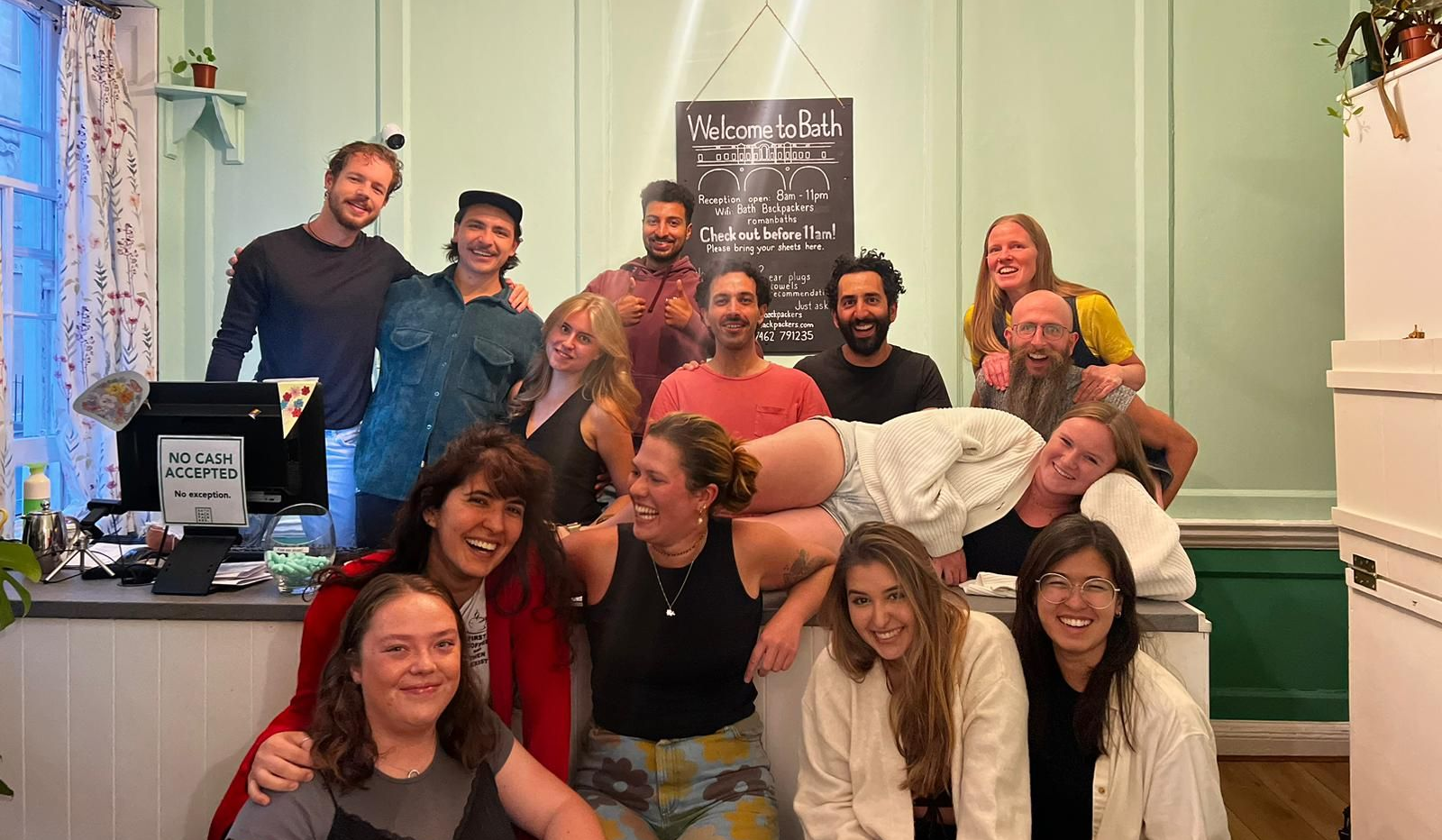
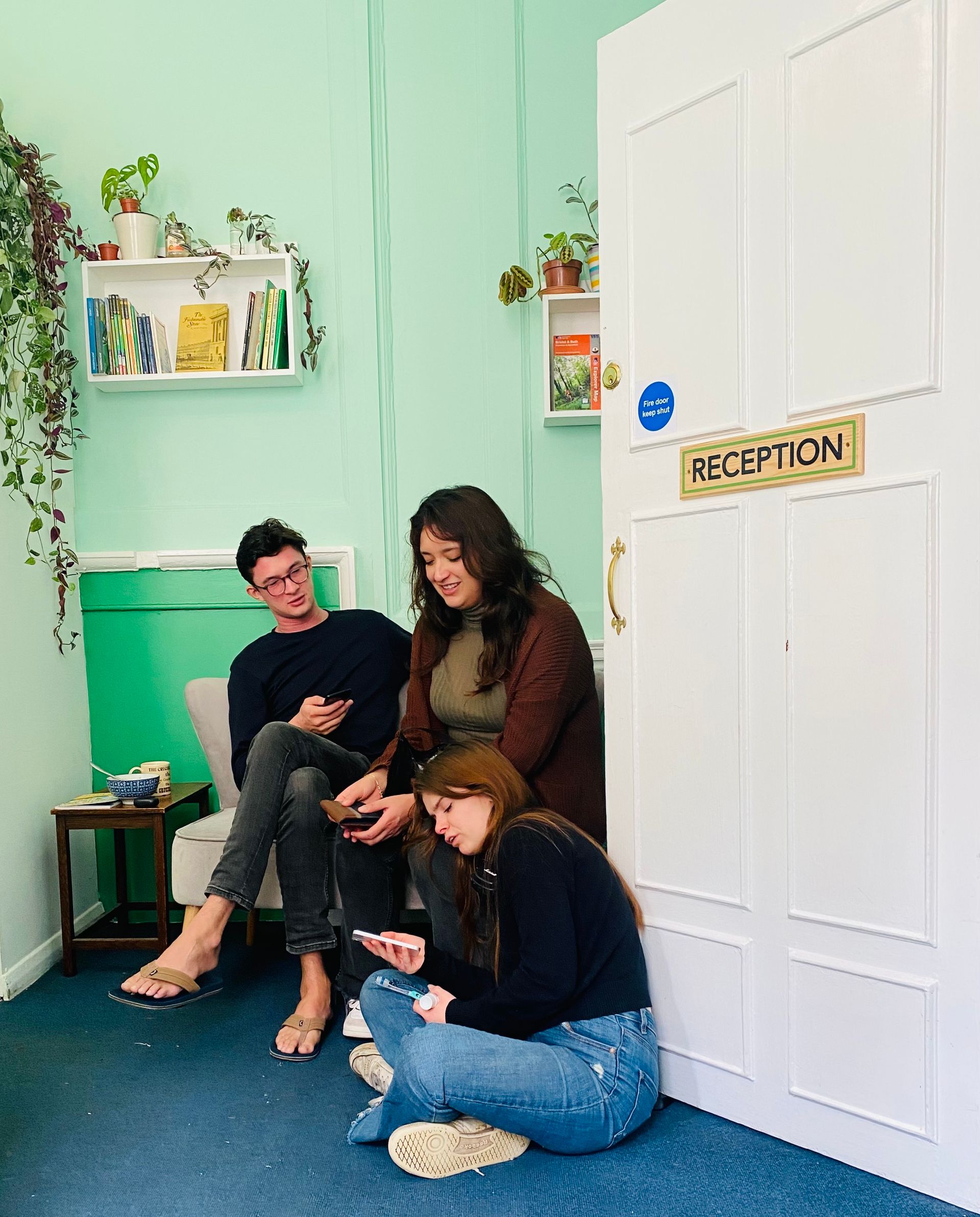
So we're testing out a potential regular event: the Swap Shop. Guests can bring stuff they don't need any more, and we'll put it out in our Common Room along with unclaimed lost property. People can rummage through and pick up whatever they need for the next stage of their journey. Any bits and pieces left at the end, we'll take to the Charity Shop.


We love exchange. Money doesn't have to pass between people for things to be good or valuable. And so, just as the process of exchange can create an enjoyable occasion in itself, the act of resisting consumption, of avoiding endless purchasing of new things, can also bring great pleasure to daily life.


We minimise our own purchases, thinking about where everything we buy or acquire has come from, how it's been made, whether we really need it. For Aris this means being a cartoon character. I wear the same clothes all the time, he says, so I'm recognisable. His charity-shop top and grey trousers - once Kate's - create a distinctive look, so he's easy to point out to guests: the curly-haired guy in the cream jumper.


Kate's moratorium on buying stuff started during Covid, when she went to meet Aris in Greece, carrying a backpack with two dresses and one pair of trousers for what was meant to be just a long weekend visit. Borders closed, and she was willingly stuck - wearing her three outfits on rotation, and realising that was completely fine.


Five months later, we got married - Aris wearing a pair of trousers passed on by his boss's girlfriend, with Kate in one of her two dresses - the white-ish one, discovered ten years ago in a market in Brussels, rifled for five euros in a pile of second hand stuff piled on the cobblestones.


Last year, as we organised ourselves to take over Bath Backpackers, thinking hard about what stuff we really needed, Kate realised she had enough clothes for a lifetime. If the small backpack was fine for what ended up being nearly a year away, then the stuffed wardrobe of fancy clothes, bought from classy shops in her previous life as a Busy Important Person, was more than enough - forever. In sorting out her family home she added a few sentimental treasures: her dad's cagoule, brother's shell suit jacket, and a beautiful cocktail dress her mum had once worn.


When we uncover things in our possession that we no longer use, we pass them on. Clothes and other objects need to be brought to life and used, and if we're not going to do that ourselves, others can. Julia looks great in the brown jacket Kate no longer wears, and it's so much more satisfying to give it a new life than to leave it sadly in the cupboard.


Sometimes, though, you really do need something specific. Julia is an expert on the charity shops of Bath and can give guests personal tips on the best spots to root out whatever they need, without contributing to the endless stream of fast fashion trash. Sometimes she’ll take people to visit her favourite spots for cool, cheap, second hand clothes. We’re even renaming one of our bedrooms Moorland, in honour of Moorland Road in Oldfield Park, home to some of the best charity shops in Bath.


If you need something only for the short period of time while you’re staying with us in Bath, please just ask. If we can lend you something, we’ll gladly do that - whether it’s a book, a bicycle or a bar of soap. We’d much rather you help us get best use from the things we already have, than that you feel obliged to buy something you aren’t going to keep using for many years to come. If you’re a bit crafty and want to salvage a favourite item, you can use our sewing machine to restore it and extend its life.


Hostels focused only on their bottom line can be tempted to charge for things like borrowing towels, hair dryers or adaptors. They might see good business sense in getting you to pay £2 to rent lockers for luggage storage before check-in and after check-out. We don’t want to do that. We’d rather guests ask us for what they need. If that leaves them with a feeling of abundance, then in return they might decide to share something with other guests, back with us, or with another person encountered on the next stage of their travels. When guests are inspired by the plentiful shelf of Sharing Spices in our kitchen to cook a meal, share it with other guests, and make connections over good food, that makes us feel happy.


We’re trying to stock up our games corner at the moment, so that guests exploring The Vaults can find Jenga and Pictionary, as well as chess and Connect Four. We’re foraging in online second-hand forums for the games we seek, and the secondary pleasure of this is what it tells us about people living in different parts of our region. Bathonians (which is how the people of Bath are known) are, it seems, not avid game-players. But it turns out that Taboo is especially popular in Southampton and South Wales, while Risk is intensely loved in Bristol.


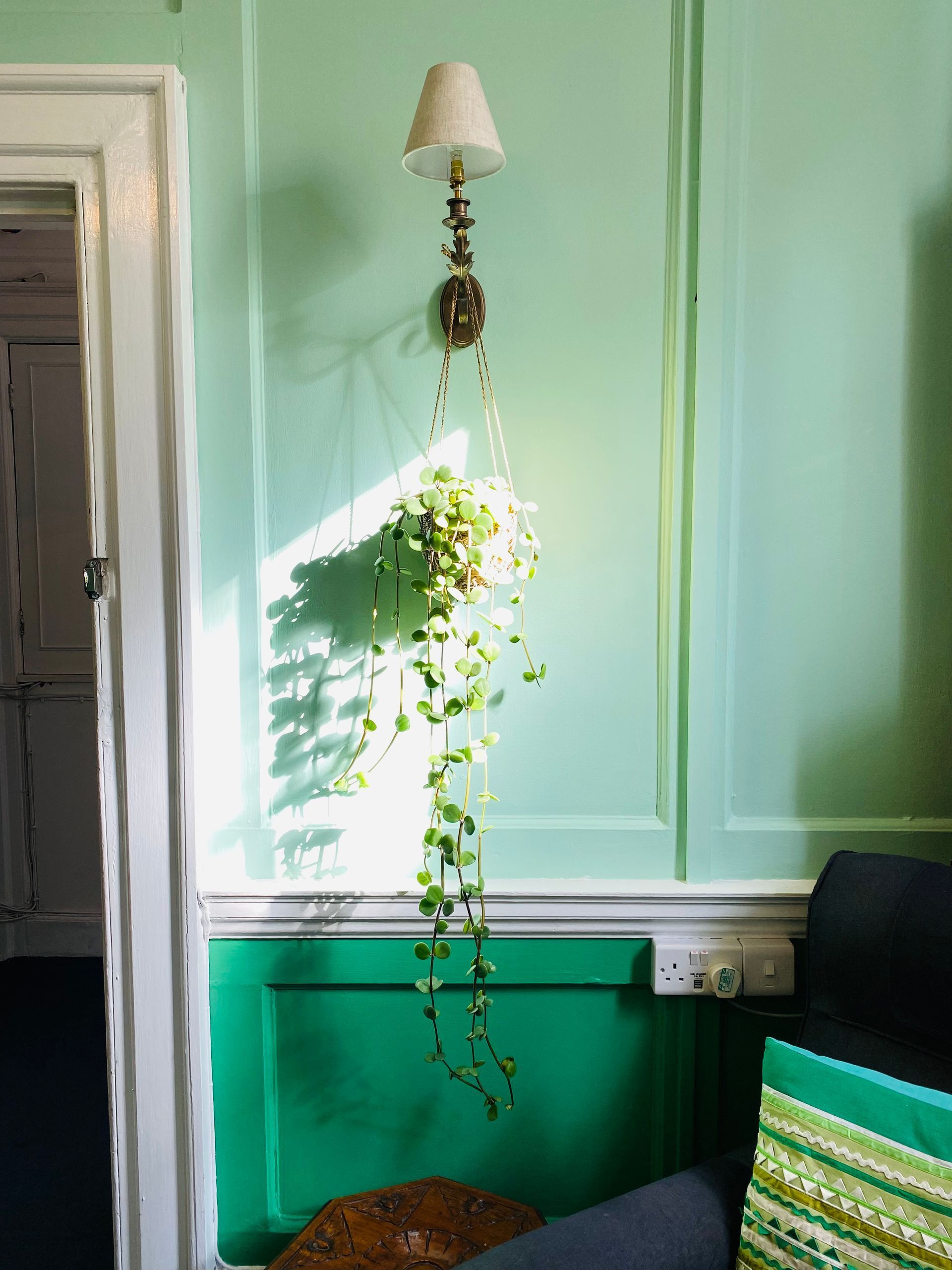
All our plants are gifts from friends and volunteers - check out the trailing plant from Ana above the clock in Reception, the succulent in the Women’s Showers given to us by Natasha, and the orchid from Eden on the Common Room mantelpiece. Or they are found for free online. Kate loves scouring Bath for struggling plants in need of a new home, while Leia has put great love into repotting and coaxing back to life the more fragile specimens, nurturing plants with foods she’s made from leftover coffee grounds and stewed banana skins.


Finding cheap and free resources, and living light, is a way of life for backpackers. We want to help our visitors experience the joy of resisting the consumption trap. And through borrowing, and in turn through offering things to others, in finding profound pleasure in the arts of sharing and exchange.


Maybe you’ll see someone wearing a top you brought along to the Swap Shop later that evening. Maybe they will invite you to join them to share the food they’ve just prepared, by way of thanks. Maybe you’ll explore Bath together the following day, and perhaps this will be the start of a lasting friendship. We don’t always know where exchange will lead. But we do know it can create opportunities for great joy.

By Kate Arthurs • October 27, 2026
They even glow in the dark, Alba says proudly, flashing nails freshly painted with ghosts and spider's webs. Sun streams into the common room, illuminating the pumpkin that Jayne will cut up for soup later this week, as we discuss ideas: we'll decorate the building, dress up, have a party. With Olivia's beautiful poster, our ideas soon turn into a spooky season festival.
By Kate Arthurs • October 8, 2026
It's a busy morning as Aris rushes back with the hair dryer, so excited about his visit that bed making will just have to wait. I went to the new Share and Repair place, he says, have you been? It's like a thing-hospital. There's someone on the desk and I say, I'm here for a hairdryer and she looks down at the list and says, Aris Arthurs? This way, please. And then there's a man, in a white coat, and he leads you through and there are all these desks with people face to face for thing-consultations. It's so beautiful and organised. And here is our hairdryer, it's mended! Hostels are hard-working places where every object has to justify its presence. Is it ok, this chopping board, asks Patrick. I've brought youse a knife too. I turn the lovely wooden chopping board over in my hands - and that sharp knife - yes, I say, they are welcome. Too many things equals clutter and a place that's hard to clean; too few or the wrong things makes for a poorly functioning environment for people sharing space and resources together. Our sewing machine was gifted to us by Yuko, and used periodically but intensely by crafty people like Maggie. When Maggie and Aris agreed we needed floor cushions in the Vaults, I wasn't convinced, imagining them as uncomfortable and bulky, cluttering the space. But as Maggie's meticulous sewing brought together a set of three beautiful, robust and (I had to admit) comfortable cushions, I was thrilled by the bringing back to use of fabric that had once been curtains in my family home, in a way that made the space softer and more welcoming. In his book Tings in De House, Shawn Sobers quotes the Jamaican poet Verna George who refers to the sewing machine as 'a member of our house'. The longer we live with the sewing machine, the more it contributes to the household, and the more Verna's reference makes sense. While I lounge on the floor cushions reading Shawn's book, Stephen switches from The Soft Bulletin to Blue Lines, and a familiar bassline pulses out. I'm sent back to a muggy Saturday afternoon, rummaging racks of second hand CDs in Bath's music exchange shop, ready to spend all my pay packet on an album. With my 90s indie tastes branching off into rap, soul, and jazz, so the CD collection grew. Streaming and travel consigned them to storage for years, but when Aris found perfect used speakers and a decent stereo, we gave them new life in the hostel. Reading on, Shawn discusses generational differences in the ornaments and souvenirs displayed in the front rooms of Caribbean families in the UK, and I find myself wondering what my parents would have thought of our choices to bring out their special plates . A dresser displaying 'best' plates and glasses is a familiar feature in British front rooms, and my childhood house was no exception. But as Ana and I boxed stacks of pretty crockery to transfer from my old family home to the hostel, I realised that these lovely 'best' items held less meaning than the frequently-used mugs and plates kept in the kitchen, and we resolved to give life to them. Now, daily use by hostel guests will likely hasten the day on which plates hand-painted for my parents' 1965 (check) wedding might break, and of course that will be sad. Still, I like to imagine my parents happy at the idea of their plates thriving through regular use, reminding me of them, and bringing beauty into our daily lives. Some things in the house have a life of their own yet still need the care of people - many of us - to thrive. I'm moving to Bangladesh, Al messaged me. Do you want my plants? The next day seven of us headed over to his place to gather armfuls of dwarf palm, pothos and cactus. Later, Emily liberated the peace lily for repotting, dividing its densely packed leaves between thirteen smaller pots. Truan lovingly wiped the leaves, and before long they started to flower. Scanning Reception to see what the plants need, I'm always reminded of people who've cared for them over time: Fine, Lea and Laure, Julian, Emily and Truan. We rely on the things in the hostel, and they rely on us. Last summer, when one of our two huge fridges stopped working, we had to make swift choices to keep our food in edible condition. Though replacing the broken part was more expensive than buying a new fridge, Aris insisted that it's wrong to discard something so big and so full of material, when it can be repaired. Skilled work revived the fridge, and it has come to stand for our commitment to repair - even of objects that are neither beautiful items nor meaningful symbols. None of us - hairdryers or sewing machines, plants or plates, fridges or humans - flourish in isolation.
By Kate Arthurs • September 30, 2026
Bye Fam, calls Erin as she heads out. Maybe not meant as a shorthand, but still, Erin's call gets me thinking. Hanging out in reception later I put the question: can you say hostel relationships are family? Yes, says Tilly immediately. But more like cousins and uncles than mums and brothers, says Iris, and Jayne nods. I don't agree. So many businesses encourage employees to identify as family in order to create feelings of obligation and commitment beyond what is reasonable, and I don't want to fall into that ugly trap. But that isn't happening, insists Tilly. Still, I grew up understanding family as fixed and given - surely we can't see our hostel companions as equivalent?
By Kate Arthurs • September 22, 2026
Aris and I are early at the Hare and Hounds to meet Clara and Sam, after a brisk uphill walk along conker-strewn side streets. We turn from the bar to be greeted not by Clara but by Teaghan who, to our great surprise, strolls through the door ahead of the others. Aris's wide eyes and broad smile fill his face, while I'm unable to contain tears of joy as Teaghan and I hug each other tight. I was your first volunteer, Teaghan reminds us, seating herself at Clara's side for Sunday lunch. Me and Julia we were in it because we wanted to help you guys, she says, but then we just brought the others along, got them into it too. Aris spent many hours on long calls to prospective volunteers before we sealed the deal to take over Bath Backpackers, explaining the project, showing it was not a scam where you'll end up in some dodgy place, patiently gathering a hardy first crew who were up for a wild ride. Julia and Teaghan were sometimes called on for verification. Do you remember when Pilar arrived? It's well over three years since we've seen Teaghan, not since she returned to Australia to launch her legal career at the start of 2023, and I'd forgotten what a firecracker she is, buzzing with energy, racing from story to story as she takes us right back to the beginning. Do you remember when we were all waiting at the bus stop in the rain, that very first crew, to go to the hostel together, but you guys hadn't even got the keys to the place yet? Yeah, I pick up, Aris and I stayed in a caravan over in Bristol, and you lot - who was that, you and Julia, plus Mari, Pilar, Eduardo and Ana, right? You lot were already in when we arrived to take over.
September 17, 2026
I agree to water my brother's allotment while he is away. Help yourself to plums and courgettes, he says, so I do - returning to the hostel with a bag full of heavy yellow marrows and jewel-like cherry plums. Every meal includes courgette, says my namesake friend Kate, who also grows her own vegetables. Courgette and tomato for breakfast, lunch and dinner. Mooching around Green Park Market on a Saturday morning is a lovely way to see what's coming out of the ground right now, say hello to Middle Ground Growers at their stall, and find seasonal food that connects with the earth and this place. From the first aroma of wild garlic in March to the jammy scent of blackberries in August, the hills of Bath are abundant in foraging opportunities.
September 10, 2026
Wow, you look amazing, I love your outfit, we all exclaim as Sophie joins us for lunch in the Common Room, her meal deal incongruous with the beautiful Regency clothes she's wearing. Did you make the bonnet yourself? Yes, she says, shyly tucking ribbons behind her ear to keep them out of her chicken wrap. I wanted to come for the Jane Austen festival but it's sold out, so I am here now instead. 
By Kate Arthurs • October 20, 2024
Why are you travelling? When I ask our guests, most people say it’s for the experience: visiting the Roman Baths, doing the Skyline walk, checking out the Jane Austen festival. The idea in the ‘90s, when I first travelled, was to 'find yourself'. I used to mock this ironically - such a cliche! - but the truth is I did come upon personal insights in the deserts of Texas, the glaciers of New Zealand and the mangroves of India. Ainslie and I are making salad together. When you're old, I ask her, what will you remember about your trip to the Balkans? The people, she answers, not missing a beat. She's nailed it - there’s a more profound reason why we travel: to connect with people. Even in the most special of places, you’ll remember the people you were with, more than the place itself. Swimming across the Rio Grande in Texas was special - because I did it with Jane. 
By Kate Arthurs • April 20, 2024
Manu, Maggie and Aymeric are spring cleaning - sorting out the last cupboards and cubby holes that are not yet fully-organised spaces. One goal is putting all gardening equipment in the same place - free Olio plant pots picked up from Twerton, found bamboo canes, and soil rescued from Abbey Hotel 's end-of-summer dismantling of their outdoor planters. Once we have a gardening store, it'll be easier for me and Leia to repot plants that have outgrown their vessels, and in turn transfer into small pots the little sprouts that have sprung roots in jam jars. We have grand future plans - cuttings, herb planters, hooks to hang baskets from ceilings - but first we need to organise our equipment. Our brave shoots of tradescantia zebrina have waited patiently over winter, after I found them blowing around in the street having been yanked from city floral displays by heavy winds or drunk students. Winter is always tough for plants and this year it's been a real struggle for ours. While we closed for building work in January, the lucky ones merely had to cope with daily coatings of brick dust, while those less fortunate found themselves teetering precariously on naked metal bed frames in a lightless Solsbury dorm, in a futile quest for pale, cold light from windows blocked by stacks of kitchen equipment. One little succulent died, likely already weakened by my overwatering.
By Kate Arthurs • November 18, 2023
The dorm room names we inherited when taking over Bath Backpackers formed a chaotic patchwork of Roman emperors, historic local figures, and different words for water that did nothing to offer guests a sense of harmony. People were fond of Jane Austen, and Aqua had a calming appeal, but “you’re in Brutus” always had a ring of punishment when we checked in guests. Julia got around this with, “you’re in the dorm, ‘Brutus’” - rendering the violence of the name a bit less, well, brutal. Still, we decided early on that we wanted to change the room names to make them more coherent and relevant, and while we were at it, we thought we may as well restore and paint our doors too. After six months of planning, designing and labour all rooms had beautifully-restored doors, complete with their lovely new names. Job done, we thought. But no. Only days after we re-christened our ground floor dormitory, we discovered we had given it a name celebrating the worst of Britain’s past. We had to think again.
August 13, 2023
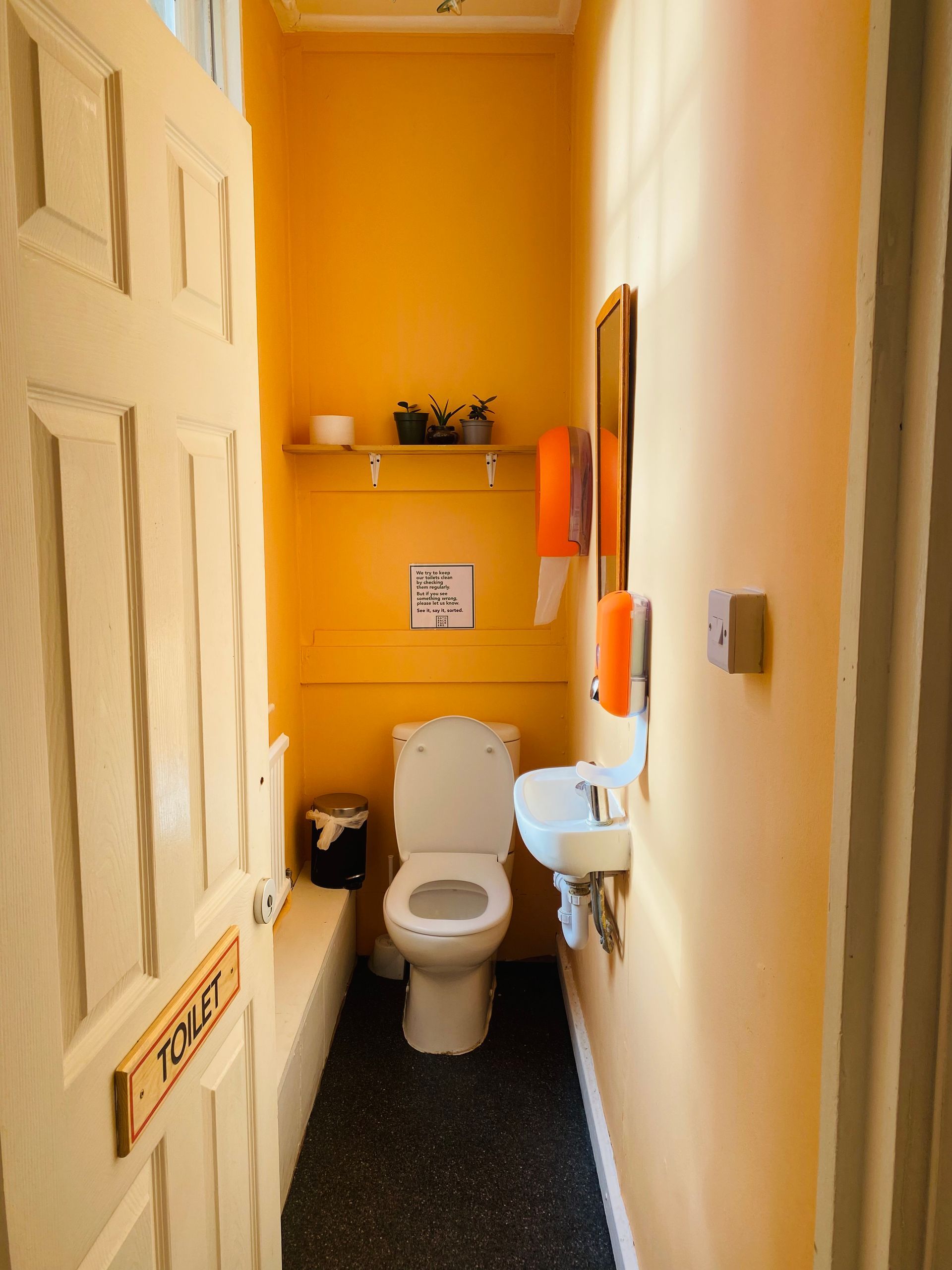
Every day we try to make things a little bit better at Bath Backpackers. Some days that’s hard - we’re tired, lack inspiration, or business operations just take over. But with collective effort we stick to this spirit of small improvements - better pillows, more charging points, upgraded storage - that make daily life smoother and more pleasant for guests. Sometimes people tell us what would help: a hook here, an extra sign there. And sometimes we’re encouraged by what other people are doing. As we’ve gradually improved our toilets, we’ve been motivated by ideas from architects, cultural centres and local bars, and have applied what we’ve learned by seeing the world through their eyes. Maddie Kessler is a ground-breaking and award-winning architect. Rather than designing the starchitect-style buildings that typically make for fame in her trade, she focuses on what people really need in public spaces, including basics like benches and toilets. She instigated public opening of the basement toilets of the British Pavilion in Venice as part of her enquiry with Manijeh Verghese into public and private spaces. As Maddie says, toilets are important in enabling access to public space. Watershed in Bristol is a cultural cinema and inviting cafe, bar and arty meeting place. As well as hosting excellent film and events programmes, they recently invested in a major toilet refit to make them welcoming and inclusive, ending up with individual private cubicles that are open to all based on function rather than who gets to use them. At Bath Backpackers, we have two universal toilet cubicles on the first and second floors, with male and female blocks downstairs - and for now, that general configuration works alright. When we took over last year, the first floor toilet’s need for emergency remedial work made it one of our immediate projects. The floor listed so much that regular guests dubbed it the Titanic Toilet: you had to use special muscles to sit on the seat, while a gratuitous cartoon of Jessica Rabbit leered down from above. Rather than waste the piece of board she was painted on, she’s now turned to face the wall. Upstairs, once we replaced the toilet itself, where Bath’s hard water had clogged the plumbing with limescale and it had stopped flushing properly, guest complaints reduced to a trickle. And by the time Franco had deep cleaned, meticulously scrubbing every inch of floor, wall, door and all installations, the toilets started to feel ok. But Aris kept reminding us: ok is not enough, we want the toilets to be beautiful. Visiting Budo bar - the new Japanese izakaya on Pulteney Bridge from the team at the Grapes - we were inspired by the aesthetic of their gorgeous ground floor toilet which reuses installations from a family home, matched with animé wallpaper. It was indeed time to start making our toilets beautiful. Julia picked out nice curvy dispensers for soap and toilet paper in a striking shade of orange. We worked out from there with apricot walls, black vinyl flooring, and refurbished vintage mirrors. Then improvements stalled. The first coats of paint weren’t robust enough, so we upgraded with a wipeable version. Our rickety floorboards resisted smooth flooring, which at first looked like a tiny mountain range. And our new lock broke immediately: the company said this was a first, having sold thousands, while we were just relieved it had malfunctioned without trapping someone in the toilet. Guests were patient as we closed one cubicle then another to improve and fix. One by one, we solved the issues and each time the toilets emerged a little bit better than before. Excited to find an off-cut of foliage blowing listlessly around Kingsmead Square, I brought it home, unearthed a jam jar Adam had kept for reuse, and potted it in soil rescued from a couple of coriander plants Eva and Estefany used to cook a shared Mexican feast. Now at home on the shelf Chris installed from a piece of wood we already had, it’s sprouting new growth. Then we returned to Watershed, and before the screening we used the toilets, where a dispenser on the wall next to a bank of sinks invites you to help yourself if you need a period product. If you’re used to female toilets, you may be familiar with such occasionally-free items that make you feel welcome, seen and cared for. But until now Aris hadn’t come across them. Heading back after the film (Barbie - neither of our cup of tea, but brilliantly presented at Watershed by Trans Barbie and Drag King Ken) he said, we should do that. We should put a nice little basket of tampons and sanitary towels in our women’s toilets. I resisted: they’re ecologically terrible products, everyone with periods should be using menstrual cups by now, we don’t want to promote unnecessary sanitary waste. Sure, Aris replied, but not everyone does use a cup yet, and it’s welcoming for women, especially if you’ve forgotten to bring something. I was persuaded. Brushing my teeth in our women’s toilets a few days later, I noticed that people were already starting to use the tampons and sanitary towels carefully arranged in a cute little tray. Watershed’s gender-neutral toilets had made the needs of menstruating people visible to everyone, including Aris. And, prompted by a design feature typically hidden from men, he’d been right to instigate this small but important improvement.
More Posts